Aaron Scherf
Aaron Scherf
(they/them)

PhD Student

I am a PhD student in Sustainable Development at Columbia University and a former USAID Foreign Service Officer. In Ukraine, I led the monitoring and evaluation team for over 50 development projects during the war. Previously, I worked on program design and social inclusion in Colombia, as well as budget analysis and knowledge management in Washington. Those experiences taught me how to ensure evidence is trustworthy and actionable, especially in conditions of rapidly changing and incomplete information. I now bring that perspective to research, data analysis, and practical software tools. I am available part-time for consulting and applied research collaborations.
Download CV
How I Can Help

I am available for consulting and applied research projects that require advanced technical analysis and practical experience in international development. I can help with:

  • Program design and evaluation: Turn problem statements into actionable plans for implementing programs and measuring results in rapidly changing conditions.
  • Geospatial data analysis: Combine satellite, survey, and administrative data to answer questions about places where information is incomplete.
  • Research and decision tools: Build reproducible workflows that fuse diverse data sources to create actionable insights and intuitive visualizations.
  • Literature reviews and gap analysis: Conduct comprehensive reviews of existing development knowledge sources to identify gaps and inform projects.
  • Development proposal writing: Help organizations develop compelling proposals that propose novel solutions to international development challenges.
  • Training & Skills Workshops: Share my experience and expertise via in-person or online workshops, as well as personalized skills development coaching.

If I can help with a problem you are working on, email me to discuss it. You can also download my CV and explore my past projects.

Selected Projects

My past projects cover diverse topics, from applied development research to tools that organize and explore information in novel formats.

Predicting Wheat Yields in New Environments featured image

Predicting Wheat Yields in New Environments

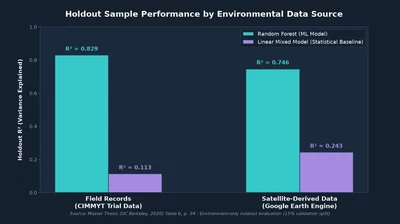
Compare satellite data, field records, and prediction models to investigate which wheat varieties may perform well where trials are limited.

Academic Hub featured image

Academic Hub

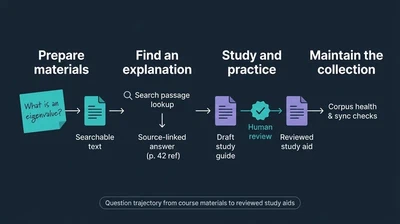
A study workspace connecting handwritten notes, textbooks, source-linked answers, and reviewed study materials.
AI Research Assistant featured image

AI Research Assistant

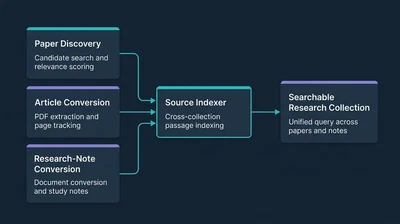
Find relevant papers, make their contents searchable, and look across them alongside personal research notes.
Novel Omnibus Normality Test featured image

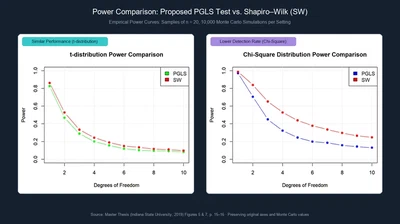
Novel Omnibus Normality Test

Detect patterns in how data depart from a bell-shaped distribution, and compare the proposed test with Shapiro–Wilk in small-sample simulations.
Resume Manager featured image

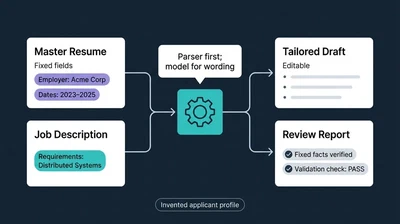
Resume Manager

Tailor a resume from a maintained record of experience, preserving fixed details and saving checks alongside each application.
Multi-Agent Development Workflow featured image

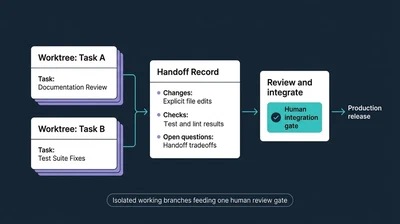
Multi-Agent Development Workflow

Coordinate AI-assisted work through explicit task handoffs, isolated working copies, and human-controlled integration.

My Research

My current research focuses on how communities prepare for and recover from overlapping climate disasters, armed conflict, and economic shocks. I am especially interested in whether social protection and disaster financing, such as index insurance and pre-crisis cash assistance, can protect livelihoods, reduce displacement, and improve long-term recovery. I want to examine how lessons from natural disaster response and resilience can be adapted for conflict settings, and how interventions impact communities differently in distinct contexts.

This agenda builds on my experience combining satellite observations and experimental data to compare crop-yield prediction models, applying advanced quantitative analysis and machine learning, and building reproducible tools for processing and organizing diverse datasets. I aim to combine methods from economics, climate science, machine learning and software development with my personal experience implementing development programs to better plan and evaluate humanitarian and social protection programs in rapidly changing and information scarce environments.

Experience

Foreign Service Officer - Monitoring and Evaluation Team Lead

USAID/Ukraine

Led results tracking, evaluation and accountability for over 50 development projects in wartime Ukraine.

Foreign Service Officer- Program Design Officer

USAID/Colombia

Led design and evaluation of development projects, including integration of gender and social inclusion efforts throughout 30 active programs.

Foreign Service Officer - Program Officer

USAID/Washington

Supported data analysis at global budget office, helped launch knowledge management office, served as Desk Officer for Sri Lanka and Honduras, and led LGBTQIA+ inclusion initiative.

Visiting Fellow / Fulbright Scholar

Centre for European Economic Research (ZEW)

Supported research on integration of asylum seekers through data analysis, presentation and report drafting. Culminated in presentation of independent research project.

Education

PhD Sustainable Development

Columbia University

MS Computer Science

Georgia Institute of Technology

Specialization in Artificial Intelligence and Machine Learning

MS Mathematics

Indiana State University

Thesis: Novel Omnibus Normality Test and Power Comparison with the Shapiro-Wilk

MS Development Practice

University of California, Berkeley

Thesis: Predicting the Yield of CIMMYT Wheat Genotypes via Remote Sensing and Machine Learning

BA Economics and Finance

Mercer University

Blog
A Course Map Where the Arrows Have to Explain Themselves featured image

A Course Map Where the Arrows Have to Explain Themselves

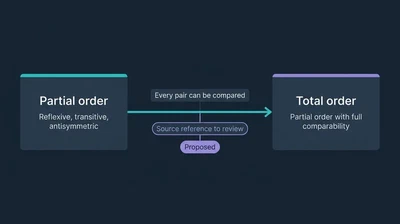
The first full microeconomics concept graph makes assumptions and source references part of each connection, giving me something more useful to inspect than a cluster of related …
A Long Study Guide Still Needs to Answer the Right Questions featured image

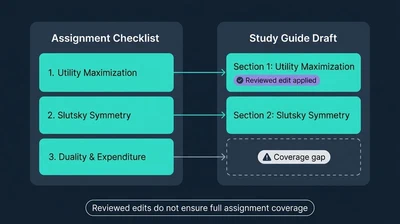
A Long Study Guide Still Needs to Answer the Right Questions

The first microeconomics guide connected selected sources, drafting, and reviewed edits—and showed why the finished guide still needed checking against the assignment.
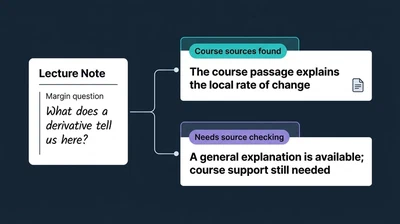
Giving the Questions in My Lecture Notes Somewhere to Go featured image

Giving the Questions in My Lecture Notes Somewhere to Go

Handwritten questions can lead to saved explanations, with a visible distinction between answers drawn from course materials and answers that still need sources.
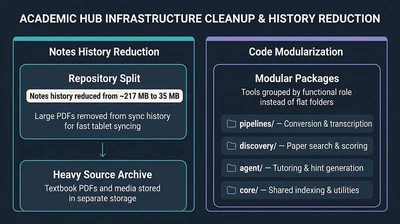
Tidying Up Academic Hub's Plumbing featured image

Tidying Up Academic Hub's Plumbing

Shrinking the notes history and keeping search records connected when source files move.
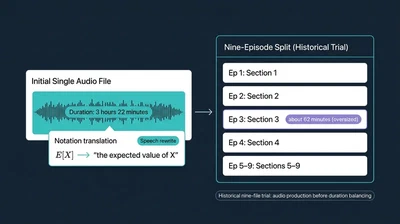
Turning Dense Math Notes into Commute Podcasts featured image

Turning Dense Math Notes into Commute Podcasts

Building audio from mathematical notes meant translating formulas first, then discovering that a valid recording could still be far too long.
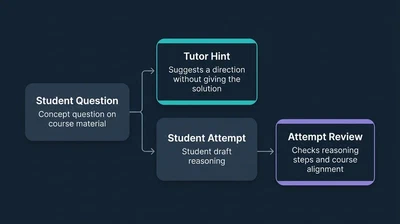
An AI Tutor That Gives Hints and Checks Your Reasoning featured image

An AI Tutor That Gives Hints and Checks Your Reasoning

A tutor that gives hints, separates different kinds of reasoning gaps, and checks a solution with a fresh view of the problem.
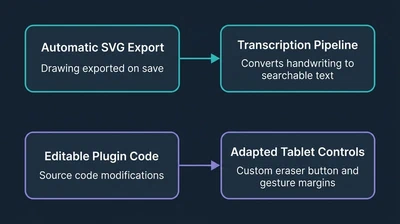
Why I Use Obsidian and Excalidraw for Academic Notes featured image

Why I Use Obsidian and Excalidraw for Academic Notes

How automatic drawing exports and editable plugins help me connect handwritten notes with course materials and adapt the app to my tablet.
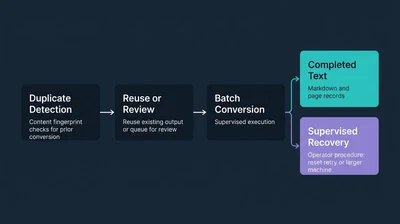
Making Textbook Conversion Easier to Run in Batches featured image

Making Textbook Conversion Easier to Run in Batches

Reusing a textbook across courses and recovering from memory failures make conversion batches easier to supervise.
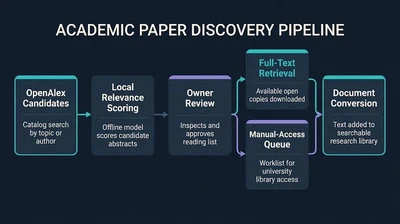
Finding Academic Papers for a Research Library featured image

Finding Academic Papers for a Research Library

Comparing abstracts with a research question and following citation trails to build a focused paper library.
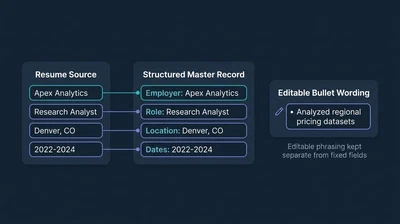
The Resume Step That Became Faster When I Removed the AI featured image

The Resume Step That Became Faster When I Removed the AI

Replacing a model's interpretation of a resume with a structured parser made the initial import faster and easier to check.