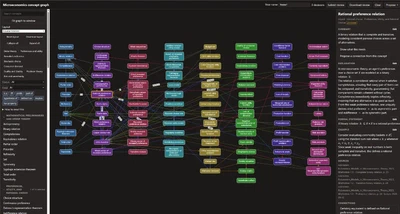
Concept Graph
Explore how course ideas connect, including the conditions a theorem needs and the source passages behind each proposed connection.
Academic Hub connects course materials with tools for studying them. Conversion makes handwriting and textbook pages readable by software; search finds the passages used in answers, study guides, and concept maps. The tools below handle different parts of that work, with review between stages. Start with the overview for a guide to how they fit together.
Explore how course ideas connect, including the conditions a theorem needs and the source passages behind each proposed connection.
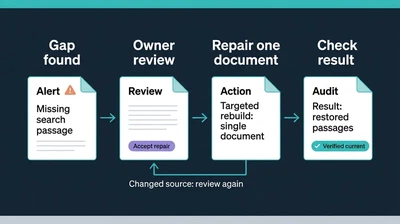
Find gaps between source documents, converted notes, and search records, then review specific repairs before running them.
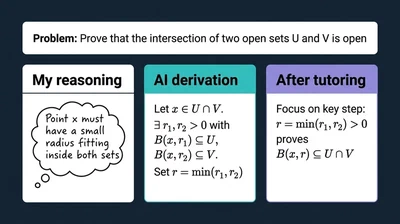
Keeping my own reasoning, AI-written derivations, and proofs developed through tutoring together with clear authorship.
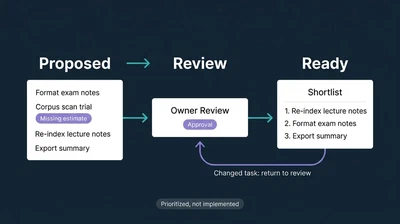
Turn a long task list into reviewed priorities, while keeping estimates and agent assignments under my control.
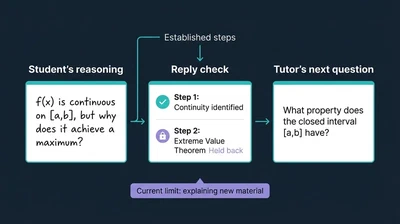
Track the reasoning a student has established and check the tutor's next reply against it—with a clear limit when new material needs explaining.
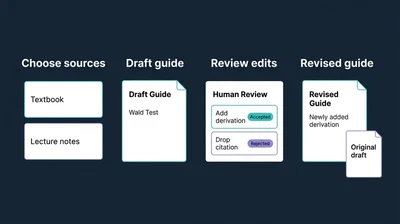
Build a guide from selected course passages, deepen thin explanations, and review proposed edits before applying them.
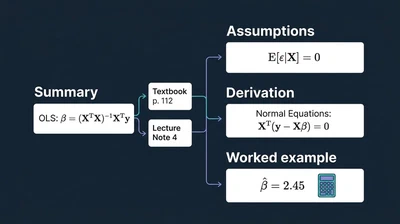
Expand a short summary into explanations and worked examples while keeping track of its original source passages.
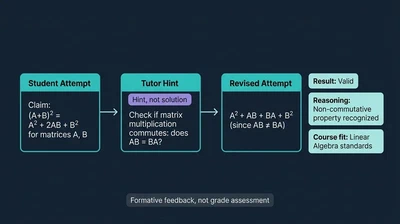
Get a hint, examine an attempt on separate reasoning criteria, and compare another solution without treating it as a final verdict.
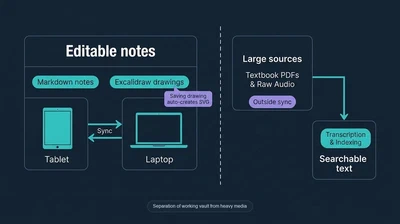
Keep editable notes available on tablet and laptop while large source files stay outside the lightweight sync.
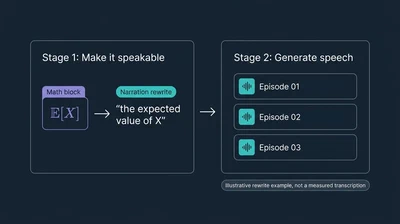
Turn notes into spoken episodes, translating mathematical notation into language a speech engine can read.
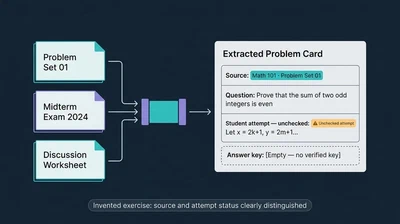
Collect scattered exercises while preserving the difference between a question, a student attempt, and a checked answer.
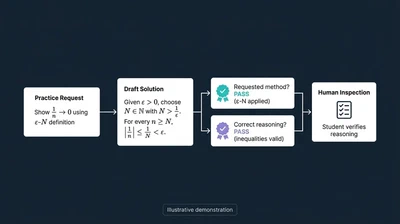
Generate extra course-style practice questions and worked solutions, checking the requested method separately from the answer.
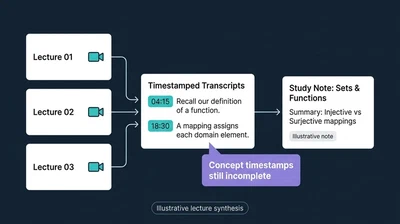
Turn lecture videos into searchable study notes, while keeping the limits of grouping, coverage, and timestamp references visible.
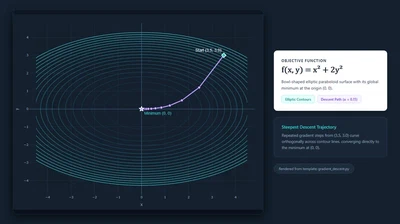
Add an interactive mathematical plot to a sourced explanation, using a prepared template or generated chart code.
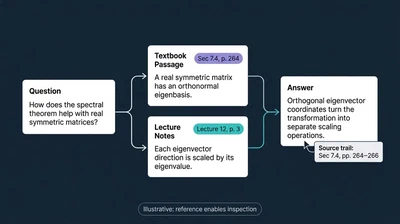
Answer questions from course passages and keep references that help inspect the explanation and its sources.
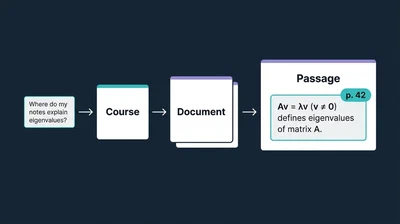
Find relevant course documents and passages, with references that study tools can use and readers can inspect.
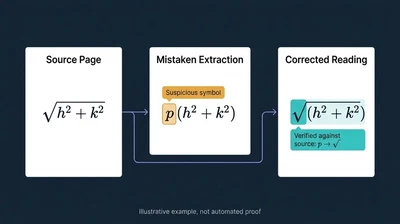
Find plausible-looking extraction errors by checking suspicious text against the original page image.
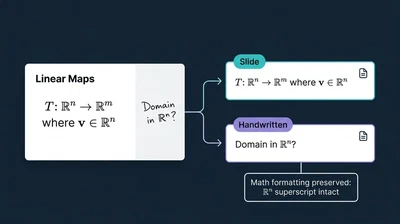
Turn handwritten and typed course materials into searchable notes, preserving a path back to the original pages.
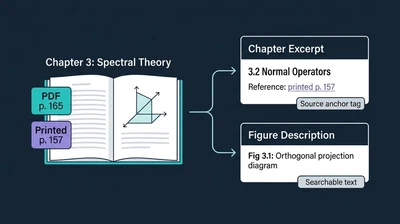
Convert mathematical textbooks into searchable study material, with chapter structure, figure descriptions, and references back to the book.